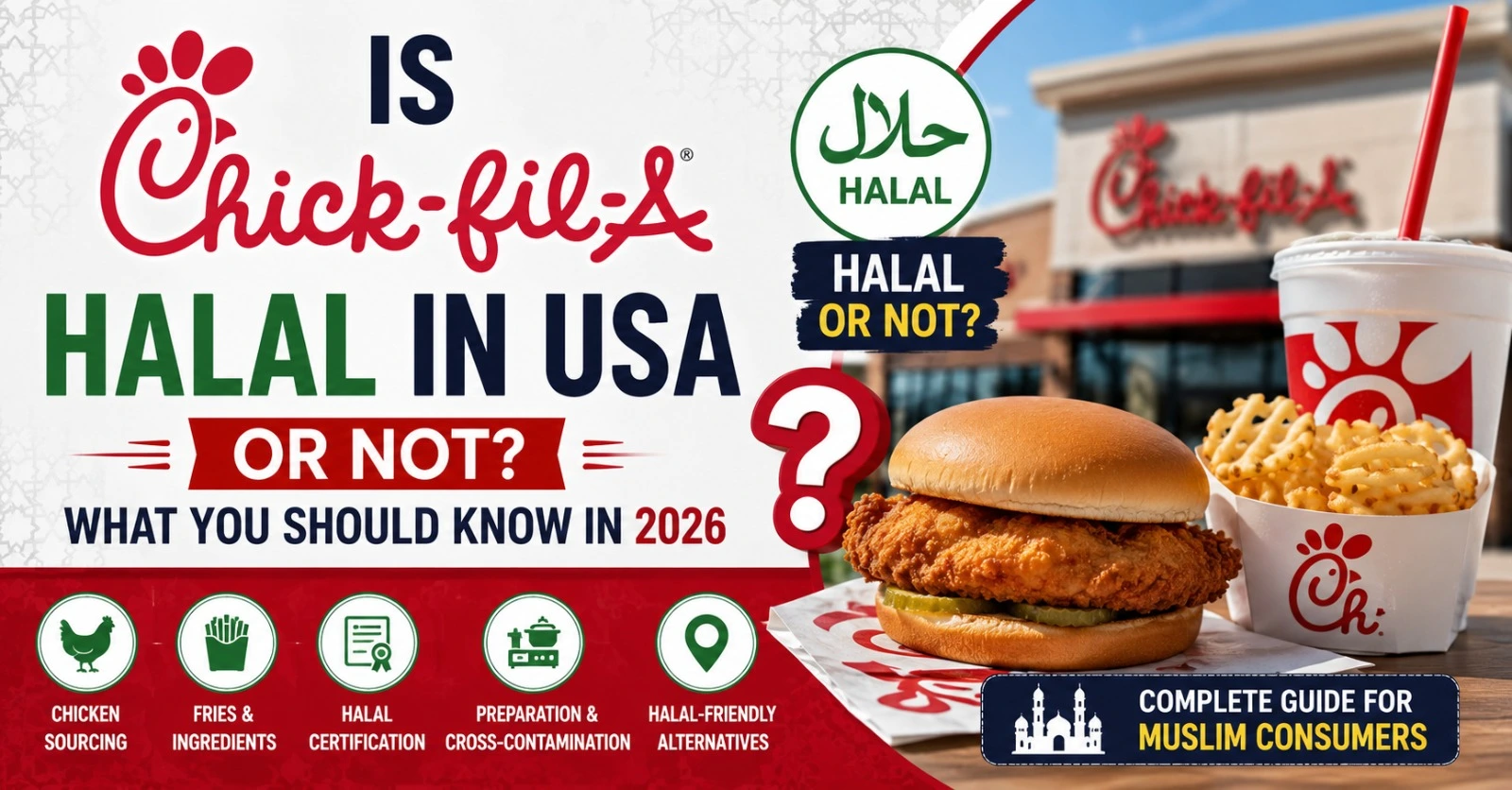
Many Muslim customers in the United States often ask one important question before visiting a fast-food restaurant: Is Chick-fil-A halal? Because Chick-fil-A is one of the most popular chicken chains in America, people naturally want to know whether its chicken, fries, and food preparation methods meet halal dietary standards.
The confusion usually starts because some menu items appear simple and chicken-based, while others believe certain ingredients may be halal-friendly. However, halal food is not only about ingredients. Preparation methods, sourcing, cross-contamination, and certification also matter.
This complete guide explains everything you need to know about Chick-fil-A halal status in 2026. From chicken sourcing and fries to halal certification and Muslim-friendly alternatives, this article covers the topic in detail so you can make informed dining decisions.
Quick Answer: Is Chick-fil-A Halal in the United States?
No, Chick-fil-A is generally not considered halal in the United States. The company does not publicly state that its chicken is halal-certified, and most locations do not carry official halal certification.
For food to qualify as halal, the meat must meet Islamic dietary guidelines during sourcing and slaughter. Restaurants must also avoid contamination with non-halal items during preparation and cooking. Chick-fil-A does not officially advertise compliance with halal certification standards in the U.S.
Because of this, many Muslim customers choose to avoid chicken items from Chick-fil-A, while others may decide based on personal interpretation and dietary preference.
| Topic | Status |
| Halal-certified chicken | No |
| Official halal certification | No |
| Halal menu availability | Very limited |
| Muslim customer interest | High |
| Public halal statement | Not officially promoted |
Although the answer may disappoint some customers, understanding the details behind halal certification helps explain why Chick-fil-A is not widely classified as halal in America.
Does Chick-fil-A Use Halal-Certified Chicken?
Chick-fil-A has not announced that it uses halal-certified chicken in its U.S. restaurants. The company sources large amounts of chicken from approved suppliers, but halal slaughter practices are not publicly confirmed.
Halal-certified meat must follow specific Islamic guidelines, including:
- Humane slaughter practices
- Blessing during slaughter
- Proper blood drainage
- Separation from non-halal processing
Since Chick-fil-A does not advertise these practices, its chicken cannot automatically be considered halal.
Many customers search online hoping that certain locations may secretly use halal meat, but there is currently no widespread evidence showing that standard Chick-fil-A restaurants serve officially halal-certified chicken in the United States.
| Requirement for Halal Chicken | Chick-fil-A Status |
| Halal slaughter method | Not confirmed |
| Islamic certification | Not publicly available |
| Separate halal preparation | Not standard |
| Halal supplier verification | Not confirmed |
This uncertainty is the main reason halal-conscious customers remain cautious about ordering chicken sandwiches, nuggets, wraps, or catering menu items from Chick-fil-A.
Why Chick-fil-A Is Not Considered Fully Halal
There are several reasons why Chick-fil-A is generally not classified as fully halal in the USA.
The first issue is certification. Most halal restaurants proudly display halal certificates because customers need proof that the food meets Islamic guidelines. Chick-fil-A does not publicly provide such certification.
The second issue involves food preparation. Even if some ingredients appear halal-friendly, shared cooking spaces can create cross-contact with non-halal products.
Another concern is supply chain transparency. Halal consumers usually want detailed sourcing information, especially for meat products. Chick-fil-A does not market its chicken as halal-certified.
| Reason | Explanation |
| No halal certification | Certification not publicly shown |
| Shared kitchens | Possible contamination concerns |
| Chicken sourcing unclear | Halal slaughter not confirmed |
| No halal branding | Restaurants do not advertise halal compliance |
These factors collectively prevent Chick-fil-A from being recognized as a halal fast-food chain in America.
Are Any Chick-fil-A Locations Halal in the USA?
Some people believe certain Chick-fil-A branches may serve halal chicken, especially in areas with large Muslim populations. However, there is no major public confirmation showing that regular Chick-fil-A locations operate as officially halal-certified restaurants in the U.S.
Restaurant policies can occasionally vary by franchise location, but halal certification requires strict standards and consistent compliance.
If a customer wants accurate information, the safest option is to contact the specific restaurant directly and ask:
- Is the chicken halal-certified?
- Is the kitchen fully halal?
- Are separate fryers used?
- Is halal certification available for review?
| Question | Why It Matters |
| Is chicken halal-certified? | Verifies sourcing |
| Separate fryers available? | Prevents contamination |
| Certification proof available? | Confirms authenticity |
| Kitchen fully halal? | Important for strict halal diets |
Without official certification or clear confirmation, most customers should assume Chick-fil-A locations are not halal-certified.
Why Many Customers Think Chick-fil-A Is Halal
Many people become confused about Chick-fil-A halal status because the menu appears simple and chicken-focused.
Unlike chains that serve pork-heavy menus, Chick-fil-A mainly specializes in chicken sandwiches, nuggets, wraps, salads, and fries. This leads some customers to assume the food must automatically be halal-friendly.
Social media discussions also contribute to confusion. Some online posts incorrectly claim that Chick-fil-A uses halal chicken, while others rely on assumptions instead of official information.
In addition, the clean branding and ingredient-focused marketing make some people feel the restaurant follows stricter food standards overall.
| Common Assumption | Reality |
| Chicken-only menu means halal | Not necessarily |
| Simple ingredients equal halal | Certification still required |
| Viral social media claims | Often unverified |
| Some items appear halal-friendly | Preparation still matters |
This misunderstanding explains why the halal question continues trending online every year.
Are Chick-fil-A Fries Halal or Haram?
Chick-fil-A fries create another major debate among Muslim customers. The fries themselves are made primarily from potatoes and cooked in canola oil, which may sound halal-friendly at first glance.
However, halal status depends on more than ingredients alone.
Preparation methods, shared equipment, and kitchen practices can influence whether fries remain fully halal according to stricter interpretations.
Some Muslims may consider the fries acceptable if no haram ingredients are directly added. Others may avoid them because of shared cooking environments.
| Fry Component | Status |
| Potatoes | Halal-friendly |
| Canola oil | Generally halal |
| Seasoning | Usually acceptable |
| Shared kitchen concerns | Possible issue |
This is why opinions about Chick-fil-A fries often vary between individuals.
Ingredients Used in Chick-fil-A Fries
The waffle fries contain sliced potatoes, seasoning, and cooking oil. No pork ingredients are publicly listed in the fries themselves.
Many customers appreciate the simple ingredient profile because it feels cleaner compared to heavily processed fast-food sides.
| Ingredient | Purpose |
| Potatoes | Main base |
| Canola oil | Frying |
| Salt | Flavor |
| Seasoning | Texture & taste |
Even though the ingredients appear simple, halal-conscious diners still evaluate the entire preparation process before deciding whether to eat them.
Cross-Contamination and Shared Fryers
Cross-contamination remains one of the biggest halal concerns in fast food.
If fries are cooked in fryers shared with non-halal products, some Muslims may avoid them entirely. Others may feel comfortable eating them depending on personal beliefs and local preparation methods.
Because Chick-fil-A kitchens are not marketed as halal-certified environments, customers who strictly follow halal dietary laws often choose safer alternatives.
| Concern | Why It Matters |
| Shared fryers | Possible contamination |
| Shared prep surfaces | Cross-contact risk |
| Non-halal chicken nearby | Concern for strict halal diets |
Understanding these factors helps customers make informed decisions based on their own comfort level.
How Chick-fil-A Prepares Its Food
Food preparation plays a major role in halal evaluation. Even if ingredients appear acceptable, the cooking process still matters.
Chick-fil-A kitchens focus on speed, consistency, and high-volume service. Chicken items are breaded, seasoned, pressure-cooked, and assembled quickly to maintain efficiency.
However, halal preparation usually requires additional separation standards.
| Preparation Area | Typical Chick-fil-A Process |
| Chicken prep | Shared commercial kitchens |
| Frying | Standard fryers |
| Assembly | Fast-paced preparation |
| Ingredient storage | Mixed restaurant environment |
These operational methods are common in mainstream fast-food chains but may not align with strict halal preparation expectations.
Chicken Sourcing and Preparation
Chick-fil-A uses suppliers approved by its internal standards, but halal slaughter practices are not officially promoted. Chicken undergoes marination, breading, and pressure cooking before serving.
| Process | Details |
| Marination | Seasoned chicken |
| Breading | Coated before cooking |
| Pressure cooking | Signature cooking style |
| Serving | Sandwiches, wraps, nuggets |
Since halal certification is not confirmed, Muslim consumers often seek alternative restaurants with verified halal sourcing.
Cooking Oils and Kitchen Equipment
Cooking oils themselves are generally not the main concern. The larger issue is whether equipment is shared between halal and non-halal foods.
| Equipment Concern | Importance |
| Shared fryers | High |
| Shared utensils | Moderate |
| Shared preparation counters | Moderate |
Strict halal compliance usually requires dedicated equipment and procedures.
Important Ingredients to Know
Customers who follow halal diets often review sauces, seasonings, and additives carefully. Some sauces may contain questionable ingredients or flavoring sources, even if they do not include pork directly.
| Ingredient Area | Customer Concern |
| Sauces | Flavoring sources |
| Marinades | Ingredient transparency |
| Additives | Processing methods |
Ingredient awareness is especially important for customers who closely monitor halal compliance.
Understanding Halal Certification in Fast Food
Halal certification is a formal process verifying that food follows Islamic dietary standards. Certified restaurants usually work with halal inspection organizations that monitor:
- Meat sourcing
- Slaughter methods
- Ingredient handling
- Kitchen cleanliness
- Cross-contamination prevention
| Halal Certification Element | Purpose |
| Verified suppliers | Ensures halal sourcing |
| Inspection process | Maintains standards |
| Separate preparation | Prevents contamination |
| Official certificate | Builds trust |
Without this certification, customers must rely on assumptions or incomplete information.
Can Muslims Eat at Chick-fil-A?
This question depends on personal interpretation, religious guidance, and individual comfort level.
Some Muslims completely avoid Chick-fil-A because the chicken is not certified halal. Others may choose vegetarian items, fries, salads, or beverages only. There is no universal answer accepted by every Muslim community.
| Customer Approach | Common Choice |
| Strict halal observance | Avoid restaurant |
| Moderate approach | Eat selected items |
| Vegetarian-only approach | Salads, fries, drinks |
Customers often consult local scholars or personal beliefs before deciding.
Halal-Friendly Fast Food Alternatives in the USA
Fortunately, many halal-friendly fast-food options now exist across the United States. These restaurants actively advertise halal certification and cater to Muslim customers.
| Restaurant Type | Popular Option |
| Halal chicken chains | Growing rapidly |
| Halal burgers | Widely available |
| Mediterranean fast food | Common choice |
| Halal wraps & rice bowls | Increasing demand |
As halal food demand continues growing, more restaurants are expanding halal-friendly offerings.
Popular Halal Chicken Restaurants
Several chains focus specifically on halal chicken and fried chicken meals.
| Restaurant Style | Appeal |
| Halal fried chicken | Similar to fast food |
| Grilled halal chicken | Health-focused |
| Halal wings | Popular among younger customers |
These alternatives provide greater peace of mind for halal-conscious diners.
Halal Burger and Wrap Chains
Burger and wrap chains with halal certification have also become increasingly popular.
| Food Category | Popularity |
| Halal burgers | Very high |
| Chicken wraps | High |
| Rice platters | Common |
| Gyros & shawarma | Widely available |
These restaurants often display halal certification clearly inside stores and online.
Things to Check Before Ordering at Chick-fil-A
If you still plan to eat at Chick-fil-A, asking questions beforehand is important.
| Question | Purpose |
| Is any item halal-certified? | Verifies sourcing |
| Are fryers shared? | Cross-contact concern |
| What ingredients are used? | Ingredient transparency |
| Is there allergen information? | Safer ordering |
Checking directly with the location helps reduce uncertainty.
Final Thoughts
Chick-fil-A is one of America’s most popular chicken chains, but it is generally not considered halal in the United States because official halal certification and verified halal chicken sourcing are not publicly confirmed.
Although some menu items may appear halal-friendly, preparation methods, shared kitchens, and lack of certification remain major concerns for many Muslim customers.
People who strictly follow halal dietary rules usually prefer restaurants with transparent halal certification and dedicated preparation standards. Others may decide differently depending on personal beliefs and comfort level.
The best approach is always to research carefully, ask questions directly, and choose restaurants that align with your dietary preferences and religious requirements.
FAQ
Is Chick-fil-A halal in America?
No, Chick-fil-A is generally not considered halal-certified in the United States.
Does Chick-fil-A serve halal chicken?
The company does not publicly confirm halal-certified chicken sourcing.
Are Chick-fil-A fries halal?
Opinions vary. The ingredients may appear halal-friendly, but shared preparation environments create concerns for many Muslims.
Is there any halal-certified Chick-fil-A branch?
No widely recognized halal-certified Chick-fil-A locations are publicly confirmed in the USA.
Which fast food chains are halal in the USA?
Several independent and regional fast-food restaurants offer halal-certified burgers, chicken, wraps, and rice platters.
Browse to check Chick fil a Catering Menu
Note: This link only works for visitors from the United States.